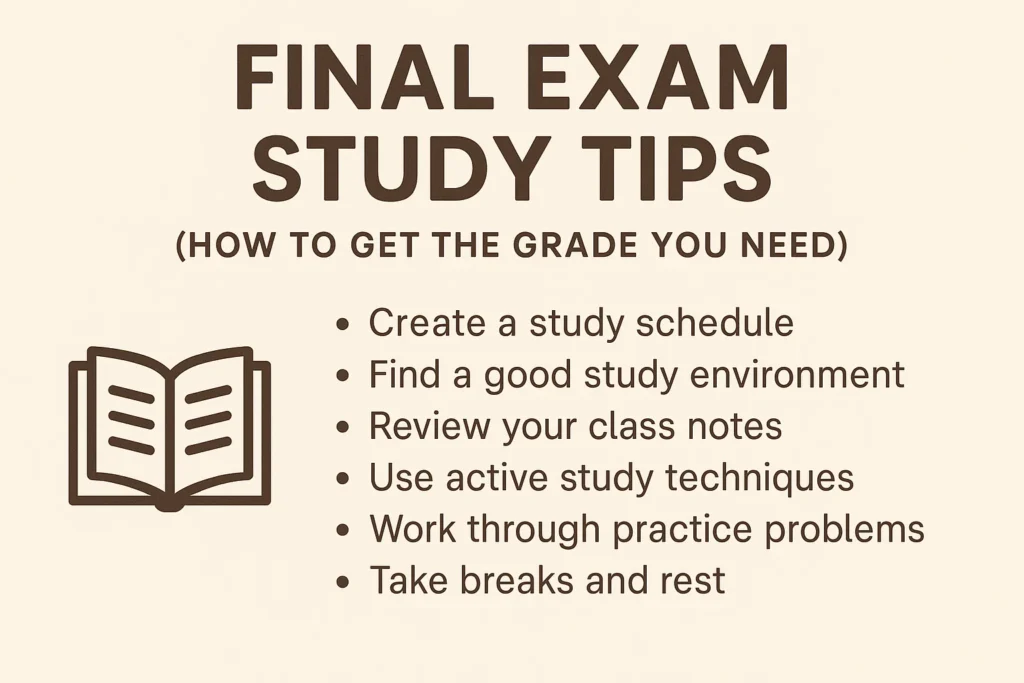
So, you’ve used the final grade calculator and now you know the score you need on your final exam. That number might feel a little scary, but it’s actually helpful. It gives you a clear goal to reach.
This article will help you get there. You’ll learn how to plan your time, study in smart ways, and take care of yourself while you prepare. Each part will guide you step by step, so you can stay calm, study well, and feel ready for your exam. Let’s begin and work toward your goal together.
Why You Need a Smart Study Plan
Studying for your final exam is not just about working hard. It’s about working in a smart way. Many students think they must study for long hours every day to do well. But that’s not true. What really helps is using your time wisely and staying focused.
One big mistake students make is waiting until the last minute to study. This is called cramming. Cramming can make you feel stressed and tired. It also makes it hard for your brain to remember things. You may forget important points during the exam because your brain didn’t get enough time to understand and store the information.
That’s why you need a smart study plan. A good plan helps you get ready in a calm and steady way. First, check your final exam schedule. Then, plan your study time for each subject. If you start early, about two to three weeks before your exam, you will have enough time to go over everything without rushing.
A smart study plan helps you:
- Avoid cramming and reduce stress
- Use time management to balance study and rest
- Review the most important topics first
- Feel more ready and confident before the exam
Studying smart means planning ahead and taking small steps each day. This way, you can learn better and feel more in control.
How to Create a Realistic Study Schedule
Now that you understand the value of studying smart, it’s time to plan your days in a way that works. A realistic study schedule helps you use your time well without feeling tired or stuck.
Here’s how to build one step by step:
1. List your subjects
Start by writing down every subject or topic you need to prepare for. Keep this list clear and complete.
2. Prioritize subjects
Decide which subjects need more time. These may be the ones you find difficult or the ones with the most material to cover. Give these subjects more attention in your plan.
3. Choose a study schedule template
Use a notebook, a printed sheet, or a digital study planner. A weekly view can help you see how your time is spread out. Keep it simple and easy to read.
4. Create focused study blocks
Divide your study time into short, clear sessions called study blocks. Each block can be 45 to 60 minutes long. Only focus on one subject at a time during each block.
5. Plan breaks
After each block, take a short break of 10 to 15 minutes. Add longer breaks in the day for meals or rest. Regular breaks keep your mind fresh and help you avoid burnout.
6. Review and adjust
Check your schedule each day. If something doesn’t work, change it. The goal is to keep moving forward without stress.
What Are the Best Study Techniques?
How you study is more important than how long you study. Just reading your notes over and over doesn’t always help. To learn better, you need to use study methods that help your brain remember and understand the material.
In this part, we’ll go over simple, science-based learning techniques. These will help you study smarter, not harder and learn in a way that actually works.
Use Active Recall, Not Passive Review
Active recall means trying to remember something without looking at your notes. It helps your brain get better at finding and keeping the information. This is different from passive review, where you just read or highlight again and again without really thinking.
You can use active recall by:
- Doing practice questions after reading a chapter
- Making flashcards and testing yourself
- Teaching someone else what you learned
- Trying self-testing at the end of your study block
This way, you find out what you know—and what you still need to review.
Try the Pomodoro Technique for Focus
It’s hard to focus for hours without a break. The Pomodoro technique is a simple method that helps you stay focused and avoid getting tired.
Here’s how it works:
- Study for 25 minutes without any distractions
- Take a 5-minute break
- After four rounds, take a longer break (15 to 30 minutes)
This method keeps your brain fresh and helps you get more done in less time.
Master Spaced Repetition for Long-Term Memory
Spaced repetition helps you remember things for a longer time. Instead of studying everything in one day, you go back to the material again and again over days or weeks.
You can follow this pattern:
- Review the topic after 1 day
- Then after 3 days
- Then after 7 days, and so on
Apps like Anki or Quizlet can help with this. They remind you when it’s time to review, based on how well you remember something.
Spaced repetition is better than cramming because it gives your brain time to absorb the information and remember it when you need it.
How to Take Care of Your Mind and Body
Your brain needs care just like the rest of your body. During exam time, it’s easy to forget about health, but looking after yourself can make a big difference in how well you study and perform.
Start with sleep. Aim for 7 to 8 hours each night, especially the night before your exam. Sleep helps your brain remember what you’ve learned. Skipping rest can lead to confusion, slow thinking, and poor focus.
Next, pay attention to what you eat. Choose brain foods that support energy and memory. These include:
- Eggs
- Nuts and seeds
- Oats and whole grains
- Fresh fruits and vegetables
Also, drink enough water. Staying hydrated keeps your mind sharp. Try to limit sugar and caffeine. These may give you a quick boost but can make you feel tired or anxious later.
Managing exam stress is just as important. You don’t need anything complex. Simple things help:
- Take short walks to clear your mind
- Try deep breathing to relax your body
- Stretch or move between study blocks
- Talk to someone if you feel overwhelmed
What Should You Do the Night Before the Exam?
The night before the exam is not the time to study new material. Your goal now is to stay calm and get everything ready for the next day. Trying to learn too much at the last minute can make you feel stressed and tired.
Here is a simple checklist to help you prepare for exam day without worry:
Review what you already know
Do a short and easy final review of key notes or flashcards. Only go over topics you’ve already studied. This is just to refresh your memory.
Get your things ready
Pack your bag with all the items you need. This may include pens, pencils, a calculator, your ID card, and any exam materials allowed. Also, choose your clothes for the next day to save time in the morning.
Check the exam time and place
Make sure you know exactly when and where your exam will be. Double-check your schedule so there are no surprises.
Limit screen time before bed
Try to avoid using your phone or computer close to bedtime. This can help your mind relax and get ready for sleep.
Sleep well
Aim to get 7 to 8 hours of sleep. Your brain needs rest to do its best during the exam.
Relax and stay calm
Do something easy like reading a book, stretching, or listening to soft music. A calm mind will help you sleep better and feel more ready in the morning.
How to Maximize Your Performance on Exam Day
On exam day, your goal is to stay calm, focused, and ready to use what you have learned. The choices you make in the morning and during the exam can help you perform better and avoid stress. Here are some clear and simple exam day tips.
Eat a healthy breakfast
Have a light but filling meal. Good options include eggs, toast, fruit, or oats. Avoid heavy or sugary foods that can make you feel slow or tired later.
Arrive early
Leave with plenty of time so you don’t feel rushed. Getting to the exam room early gives you time to relax and get settled.
Read the whole exam first
Before answering, quickly read through all the questions. This helps with time management in exam and lets you plan how much time to spend on each part.
Start with the easy questions
Answer the questions you know first. This builds your confidence and helps you save time for harder ones later.
Stay calm during the exam
If you feel nervous, stop for a moment and take a few deep breaths. This can help you focus again.
What to do on exam day matters. Take care of your body, manage your time, and stay steady. These simple actions can help you do your best.